
Be More Cat: What Cats Can Teach Us About Energy, Boundaries and Rest
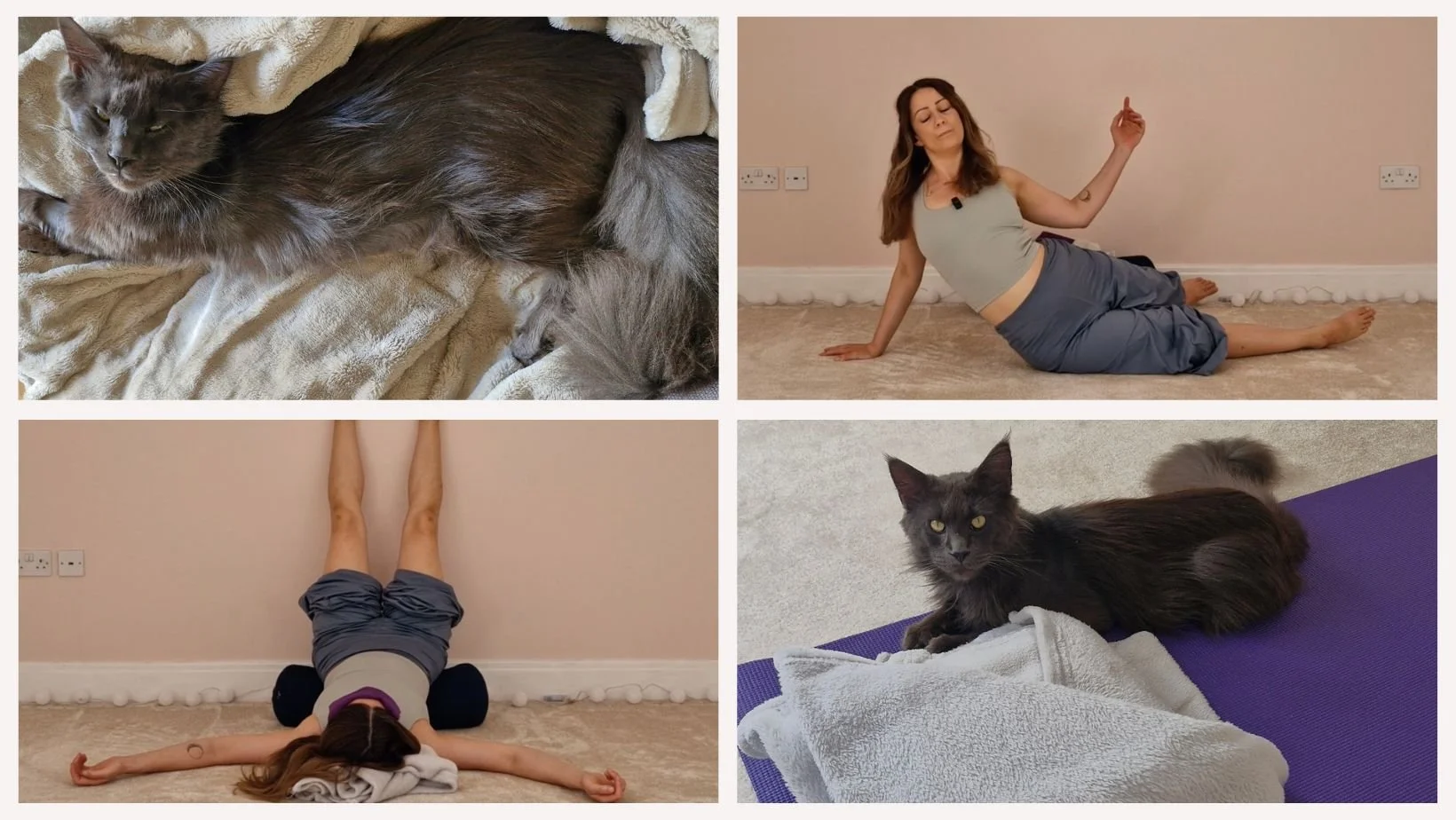
When I was a little girl, I always said I wanted to be a cat when I grew up. Or a nurse.
And, in some strange way, I seem to have become a little bit of both.
As a Yoga Therapist, I roll around and stretch for a living, guide cat naps in the form of yoga nidra, and support others through their healing process.
Perhaps becoming a cat was never quite as unrealistic as it sounded.
This month, I’ve started fostering cats. Pictured is the magnificent Maine Coon boy who has been sharing my home over the past few days—and bringing my old Be More Cat mantra back to life.
Watching him move through his day has reminded me how naturally animals respond to their needs. There is no complicated internal negotiation. No guilt about resting. No attempt to maintain the same level of energy from morning until night.
He plays when there is energy to express, retreats when he needs space, seeks connection when he wants company and sleeps when he is tired.
Simple, perhaps—but not always easy for us humans.
Making space for the zoomies
I don’t have a garden, so I get to experience his zoomies thundering along my apartment corridor.
He races around, attacks the sofa, leaps up the stairs and occasionally becomes a joyful little menace—sometimes in the middle of the night.
I listen and watch as he gives himself completely to the moment: running, rolling, scratching, pouncing and playing.
Then, once that burst of energy has moved through him, he returns to a state of simply being. He hangs out on the balcony watching the world go by, stretches himself across the floor or curls up somewhere comfortable for a nap.
There is a natural rhythm to it: activation, expression and rest.
It has made me think about how often we experience energy or emotion without giving it anywhere to go.
Frustration, restlessness and stress can gather during the day while we carry on working, caring, replying and pushing through. We may become disconnected from the urge to move, make a sound, shake something out or take a proper pause.
Sometimes we need stillness. Sometimes we need expression first.
That doesn’t mean we all need to race around the house at 3am—although a kitchen dance can be surprisingly effective.
It might mean stretching, walking, humming, sighing, shaking out the hands, rolling the shoulders or putting on a song and letting the body respond in its own way.
Then we can pause and notice what comes next.
Knowing when enough is enough
Cats also seem to understand boundaries beautifully.
They can be deeply affectionate and enjoy closeness, but they also know when they have had enough. They move away. They find a quiet corner. They don’t generally stay available simply because somebody else would prefer them to.
Many of us have become skilled at overriding those quieter signals in ourselves.
We agree when we want to say no. We stay in conversations after our energy has gone. We keep giving because it feels easier than disappointing someone. We wait until we are exhausted, irritable or overwhelmed before recognising that we needed space much earlier.
Protecting our peace does not have to mean building a wall around ourselves. It can begin with noticing:
Do I want connection right now, or do I need some space? Is this a yes, a no, or perhaps a not today?
When our capacity begins to change
This kind of listening can become especially important during perimenopause.
The shifts leading towards menopause can unfold gradually over a number of years. Our sleep, energy, temperature, concentration and emotional landscape may feel different—and our capacity may not be the same from one day, or one phase of the cycle, to the next.
This isn’t a personal failure or evidence that we should try harder. It may be an invitation to become more responsive to ourselves.
Rather than expecting the body to perform with perfect consistency, we can begin to ask what would feel supportive today.
We might need movement and expression, cooling and quiet, time alone, reassuring connection—or a much earlier night.
This is not about getting every need met immediately. Life does not always allow that.
It is about rebuilding the relationship with ourselves so that we can hear what the body is communicating and make small adjustments where possible.
Over time, those small moments of listening can help life feel a little more spacious.
A small invitation to be more cat
You don’t need to turn this into another wellbeing checklist to complete perfectly.
Perhaps choose just one question each day and see what you notice:
Have you played today?
Have you made space to observe nature—especially the leaves changing at this time of year?
Have you explored somewhere new, or met a different part of yourself?
Have you moved or expressed some of the energy you are carrying?
Have you used your voice?
Have you allowed yourself to get cosy and rest?
Have you noticed whether you need connection or space?
Have you protected your peace?
You might begin with the question that creates the strongest response in you.
There is no need to make a project out of it. Try one small thing, notice how you feel and allow your own rhythm to emerge over time.
I’m currently creating a new cat-inspired autumn practice to help you explore some of these ideas through movement, expression and rest. More on that soon.
Stress, sleep and perimenopause
If stress, disrupted sleep or changing moods have been affecting you during perimenopause, I’ll be exploring these themes more deeply in my October workshop, Something Is Shifting: Stress, Sleep & Perimenopause.
We’ll look at why this stage of life can affect how we experience stress and sleep, alongside supportive practices to help you reconnect with your body, understand your changing capacity and find more steadiness within the shifts.
Sunday 18 October
Find out more and book your place
For now, perhaps the invitation is simply this: notice what you need, respond where you can—and be a little more cat.